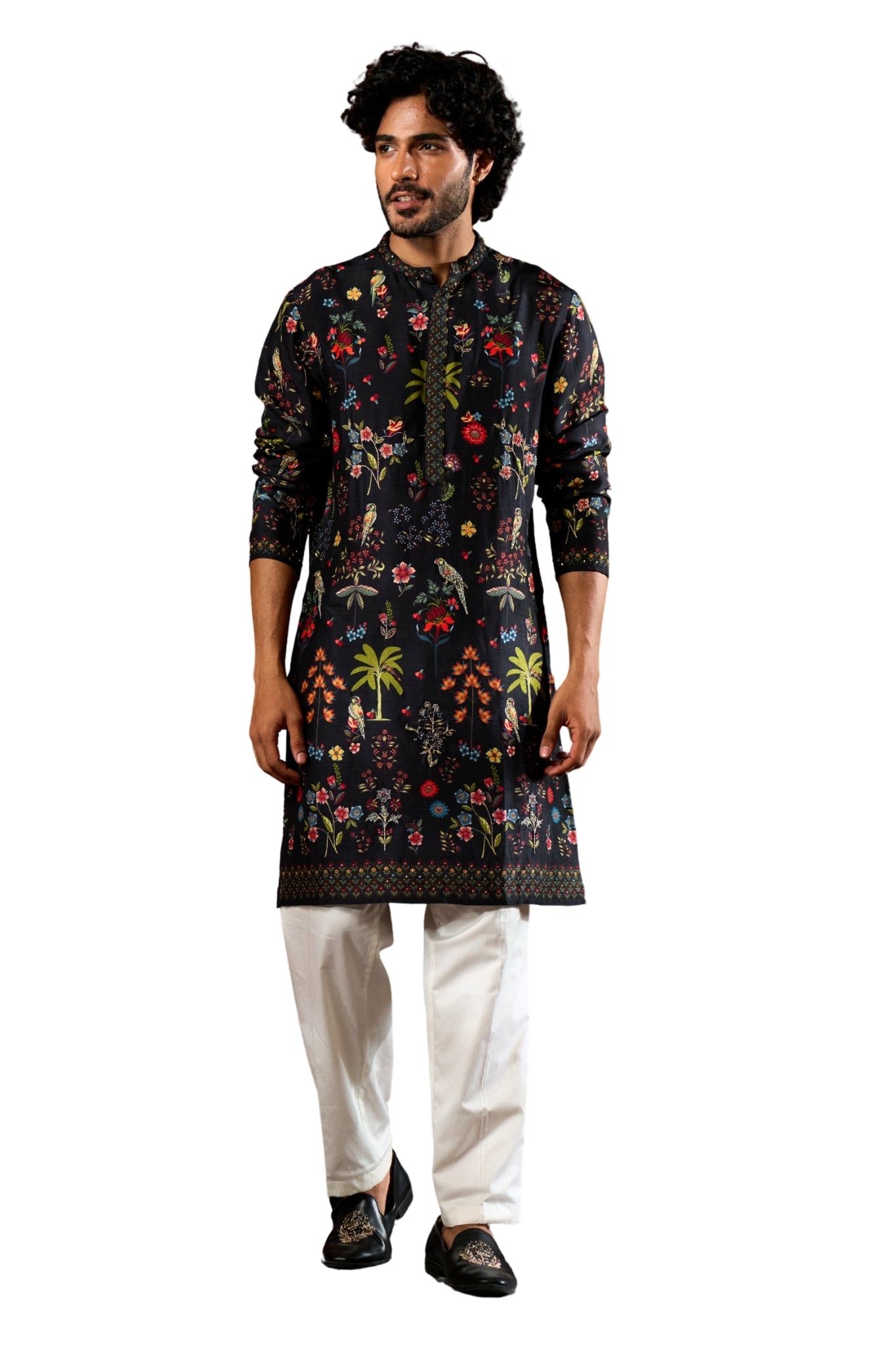
From Garba to Dandiya: 5 Traditional Kurtas for Men This Navratri
Navratri brings nine nights of non-stop energy, devotion and those unforgettable Garba and Dandiya dances. If you’re a man getting ready to hit the dance floor in style, you already know how much the right outfit matters.
This guide is all about pairing rich Gujarati festive wear for men with modern touches, so you stay comfortable while you spin and clap those sticks. Navratri isn’t only about worshipping Goddess Durga — it’s a cultural celebration where fashion plays a starring role alongside the rituals.
The trends this season lean into vintage colours, muted metallic accents and embroidered embellishments that catch the light under festive bulbs. And if you want authenticity, brands like Taroob stand out with heritage-influenced, handcrafted kurtas. Below, we break down five must-have traditional kurta styles for men this Navratri — from Garba kurtas to complete Dandiya outfit ideas.
Understanding traditional Gujarati men’s attire for Navratri
Men’s traditional Gujarati clothing for Navratri has roots in both royal courts and the rural dress of Gujarat and Rajasthan. In earlier times, garments like the kediyu (a short, gathered kurta) worn with a dhoti or chorno were everyday wear for farmers and warriors — symbols of simplicity and strength. Today the kediyu has been reborn as a stylish, urban statement that nods to that heritage.
The key elements were practical: kedia-style short kurtas made it easy to manage the spin of Garba, while breathable cotton and silk kept dancers cool through the night. Embellishments like mirrors, tie-dye and block prints celebrated Gujarat’s artisan crafts. Wearing traditional Garba attire isn’t just a fashion statement — it’s a way of honouring culture, unity and devotion.
Garba’s circular motion represents the flow of life, so your outfit should move with that energy. Dandiya is about coordination, which is why coordinated, colour-popping pairs work so well. Today, we’re also seeing modern fusions — digital prints over hand-embroidered sequins, slim fits and even jogger-style bottoms in place of the traditional dhoti. For an authentic touch, Taroob’s handcrafted kurtas feature crafts like Kalamkari and Chikankari, rooted in genuine Indian craftsmanship.
The 5 essential traditional kurtas for men this Navratri
What should men wear for Navratri? Here are our top five kurta styles, each blending tradition with modern festive trends:
-
Chikankari kurta: elegant white embroidery for subtle sophistication.
-
Mirror work (Abhla Bharat) kurta: sparkly Gujarati flair that lights up the night.
-
Block print / Kalamkari kurta: versatile patterns for day-to-night vibes.
-
Bandhani (tie-dye) kurta: colourful, authentic tie-dye artistry.
-
Silk brocade kurta: luxe threads for those special celebration days.
1. Chikankari Kurta

Timeless, breezy and elegant — the Chikankari kurta is a classic. This Lucknowi embroidery technique uses delicate shadow work and fine stitches (sometimes with sequins) to create intricate patterns that look almost whispered onto the fabric. It’s all about subtle sheen — refinement without the flash.
For Navratri, stick to white, cream or pastels; they reflect purity and keep you cool under the lights. Pair with a churidar for a fitted look or straight pants for casual comfort, and add a simple stole or keep it minimalist. For premium handwork, Taroob’s Classic Sequin Chikankari Kurta Pajama Set is a standout — silk-cotton in white or midnight blue with sequin detailing for extra festive sparkle, perfect for smart-casual Navratri nights.
2. Mirror Work Kurta

If you want to literally sparkle on the Dandiya floor, a mirror work kurta is your best bet. Known as Abhla Bharat, this Gujarati craft embeds tiny mirrors into the fabric with embroidery for a dazzling effect — a style that originated with nomadic tribes who believed the mirrors warded off evil.
For Navratri, go for vibrant yellows, reds or silvers that catch the spinning lights. Style it traditionally with a dhoti, or modernise with a comfortable pajama. Our top pick is Taroob’s Hand Tie & Dye Mirror Work Kurta Pajama Set in honey yellow or grey — silk-cotton with mirror embellishments and a slim fit that lets you move freely.
3. Block Print (Kalamkari) Kurta

Block print and Kalamkari kurtas are the versatile heroes of Navratri fashion — rooted in Rajasthani and Gujarati traditions where wooden blocks dipped in natural dyes create paisley, geometric and floral motifs. It’s eco-friendly artistry, with patterns that carry real heritage and stories.
Their versatility means you can wear them from daytime pujas to nighttime Garba; pair with jeans for casual or churidars for semi-formal. For a richer, festival-ready take with block-like depth, try Taroob’s Kashidakari Embroidered Kurta Pajama Set in black silk-cotton — explore it within our Garba dresses for men collection.
4. Bandhani (Tie-Dye) Kurta

Bandhani, the iconic Gujarati tie-dye art, creates its signature dots by tying the fabric before dyeing — resulting in explosive, celebratory patterns. It’s deeply meaningful too, with colours like red for joy and yellow for prosperity symbolising good fortune.
For Navratri, embrace traditional hues with modern interpretations — it’s perfect for high-energy Dandiya nights where the colours swirl with your steps. Taroob nails this with the same Hand Tie & Dye Mirror Work Kurta Pajama Set — essentially a bandhani masterpiece in honey yellow or grey, where the silk-cotton fabric and mirror accents make it an ideal Garba kurta. Dry clean to preserve the dyes.
5. Silk Brocade Kurta

For those luxe Navratri nights, nothing beats a silk brocade kurta — woven with gold or silver threads for a royal sheen that harks back to Mughal influences. It’s an investment piece with intricate designs that elevate any look.
Opt for rich jewel tones like deep blue or gold for the main celebration days, and pair with churidars for elegance. Taroob’s Hand Embroidered Zardozi Kurta Pajama Set is the brocade dream, with zardozi gold work on cotton-silk in cornsilk. For another opulent option, the Shaam-e-Sozni Embroidered Kurta Set in black brings brocade-like sozni needlework — browse it in our designer kurta pajama collection.
Complete styling guide
Got your kurta? Now let’s build the full look. It’s all about balancing tradition with comfort so you can dance till dawn.
Bottom wear options:
-
Traditional dhoti: flowy cotton for authentic Gujarati spins — great with mirror work kurtas.
-
Modern churidar pants: slim and stretchy, ideal for Chikankari or brocade.
-
Straight-cut pajamas: the comfy default, as in most Taroob sets.
-
Jogger-style pants: a trendy, urban twist for block prints.
Footwear:
-
Traditional mojris: embroidered leather for a royal touch.
-
Kolhapuri chappals: open-toed and breathable for long nights.
-
Modern ethnic sandals: cushioned comfort without sacrificing style.
Accessories:
-
Traditional jewellery: kada bracelets or simple chains.
-
Watches: minimalist dials in gold tones complement ethnic wear.
-
Headgear: a saffa or pagdi in matching colours makes a bold statement.
-
Shawls: drape one of Taroob’s dusala & shawls for men — Pashmina, Kalamkari, Kaani or Jamawar — over your kurta for warmth and flair. A Nehru jacket also layers beautifully on cooler evenings.
Colour coordination: match bottoms to your kurta’s accents — white churidars with pastel Chikankari, or bold bandhani with neutral pants. Pro tip: keep harmony in mind so your look pops in group photos.
Fabric and comfort considerations
Dancing for hours? Fabric is your best friend. Cotton offers ultimate breathability, while cotton-silk blends give a silky feel without the sweat — both wick moisture so you stay fresh through long Garba and Dandiya nights. For fit, go for relaxed shoulders and a slim waist; nothing too tight to restrict your moves. In mild October weather, lighter fabrics rule, but layer with a Pashmina shawl if it cools down. Care-wise, dry clean embroidered pieces to preserve the detailing, and gently hand wash cottons.
Shopping guide and budget
Looking for the perfect Garba kurta for men? You can start at local markets like Ahmedabad’s Law Garden for bargains, or shop online for authenticity and convenience. As a guide:
-
Affordable (under ₹2,000): basic cottons from local stores.
-
Mid-range (₹2,000–5,000): printed blends with some embroidery.
-
Premium (above ₹5,000): handcrafted pieces like Taroob’s embroidered designer kurta sets, worth it for heritage quality.
Check for handwork labels, fabric weight and certifications. And shop early — festive demand peaks fast in the run-up to Navratri.
Regional variations and cultural sensitivity
Gujarat’s styles vary by region: Kutch is known for mirror work, while Surat favours bandhani. Wearing traditional Gujarati dress respectfully means supporting the artisans behind it — choosing ethical makers like Taroob, who help preserve crafts such as sozni and Kalamkari, keeps these traditions alive. Modern adaptations are welcome, but the most meaningful pieces are the ones that honour their roots.
Conclusion
These five kurtas — Chikankari, mirror work, block print, bandhani and silk brocade — are your ticket to a stellar Navratri. Pair them with our styling tips for the perfect Garba or Dandiya look, embrace the tradition, and dance with joy. Ready to shop? Explore Taroob’s Navratri dresses for men and start with a Chikankari or mirror work set today.
More festive style inspiration
-
Browse all articles on the Taroob Blog.
Frequently Asked Questions
What should men wear for Navratri Garba and Dandiya?
Traditional kurta styles work best — Chikankari, mirror work, block print, bandhani or silk brocade kurtas, paired with a dhoti, churidar or comfortable pajama. Choose breathable cotton or cotton-silk in vibrant colours so you stay cool and look great on the dance floor.
What is a kediyu?
A kediyu is a short, gathered Gujarati kurta traditionally worn for Garba. Its flared shape is designed for movement, making it ideal for the spins and claps of Garba and Dandiya. Modern versions blend this heritage cut with contemporary fabrics and fits.
Which fabric is best for dancing during Navratri?
Cotton and cotton-silk blends are the most comfortable for long Garba and Dandiya nights because they breathe well and wick away moisture. Heavier embroidered silk sets are better suited to dinners and photo-heavy celebration days.
What colours are best for a Navratri kurta?
White, cream and pastels suit refined Chikankari looks and evening pujas, while bold yellows, reds and silvers shine on the Garba floor. Jewel tones like deep blue and gold are perfect for the grand finale and main celebration days.
How should I style and accessorise a Navratri kurta?
Pair your kurta with mojris or kolhapuris, a minimalist watch, and optional headgear like a saffa. Drape a shawl or layer a Nehru jacket for cooler evenings, and coordinate your bottoms with the kurta’s accent colours.
How do I care for embroidered and mirror work kurtas?
Dry clean embroidered, sequin and mirror work pieces to protect the detailing, and store them in a cool, dry place away from direct sunlight. Plain cottons can be gently hand washed.