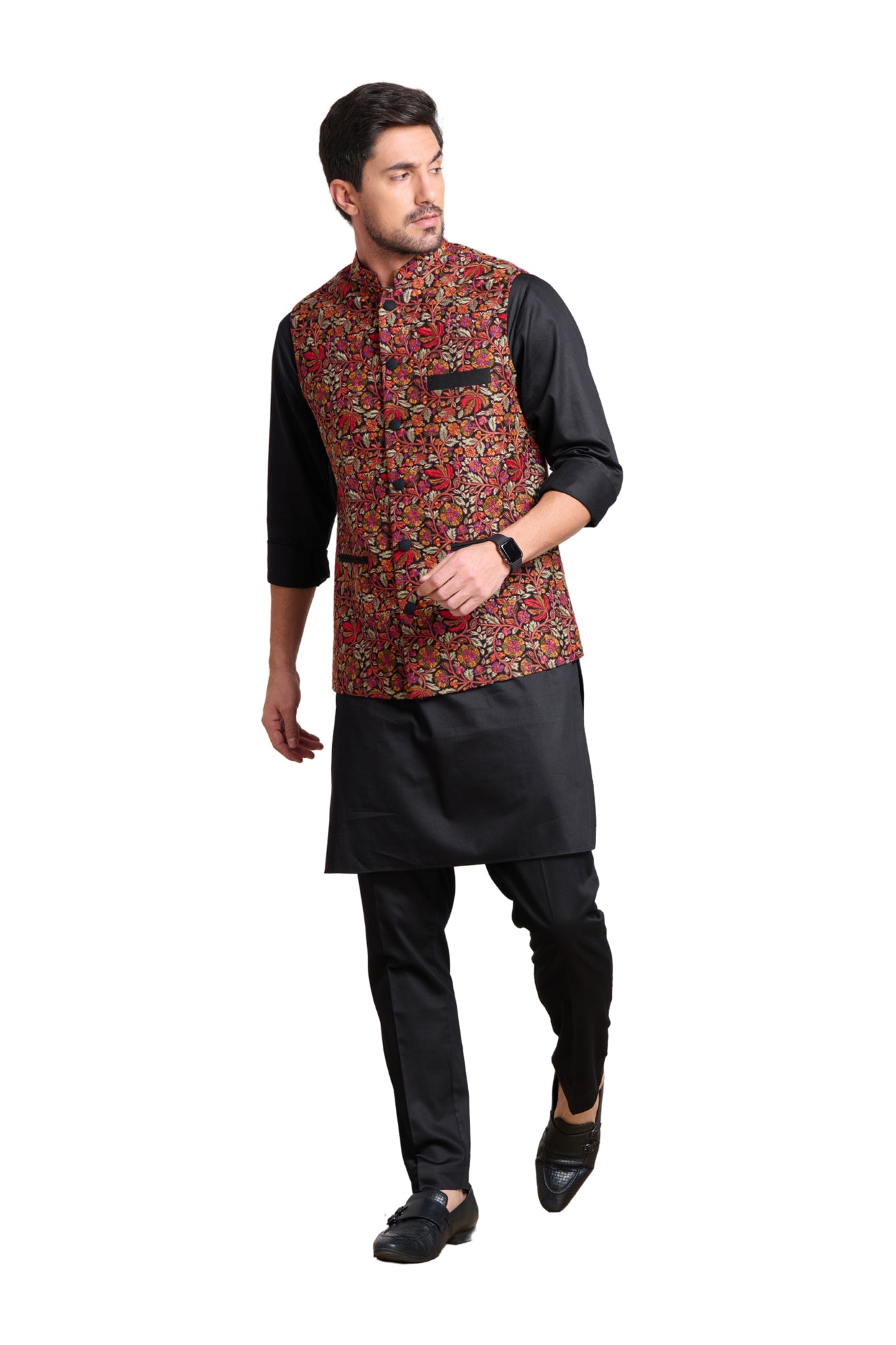
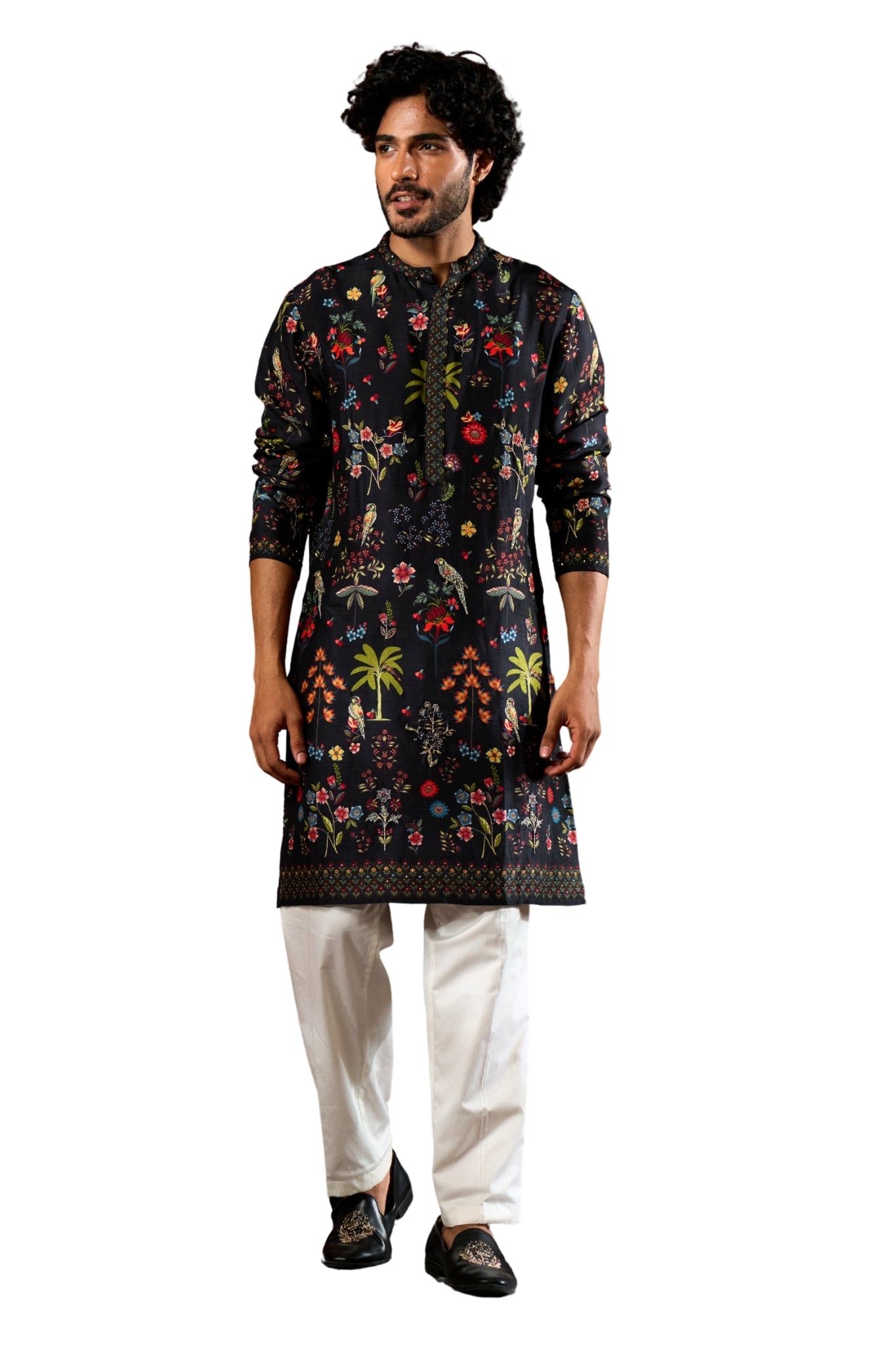
Your sister is getting married. This is not someone else's wedding you are attending as a guest. This is not a colleague's reception where you can get away with a decent kurta and a polite smile. This is your sister's wedding. You are the brother of the bride. You are in every photograph. You are on stage for the ceremonies. You are greeting guests who are judging, consciously or not, how the family presents itself. You are walking beside the baraat. You are standing next to the mandap. You are visible, continuously, for every function across every day of this multi-day celebration. And the brother wedding dress for men you choose will determine whether you are remembered as "the bride's brother who looked incredible" or "the bride's brother who clearly did not put much thought into it."
This is not the moment for the kurta you have been wearing to every function for the last three years. This is the moment for something handcrafted, considered, and worthy of the role you are playing in the most important celebration of your sister's life.
At Taroob, our collection for the brother of the bride is handcrafted by artisans in Amritsar using fabrics, embroidery, and tailoring designed for the specific demands of Indian wedding functions. The pieces in this guide are built to photograph beautifully, perform across multiple functions from Mehendi to reception, and make you look like the man your sister has always been proud to call her brother.
The Brother of the Bride: Why Your Outfit Matters More Than You Think
Here is the reality that most brothers do not consider until it is too late: at an Indian wedding, the bride's family is on display. Not just the bride. The entire family. The parents, the siblings, the close relatives, all of them are representatives of the family's taste, their values, and their respect for the occasion. When the groom's side arrives, and the two families meet, they are reading each other. Not just the words and the warmth, but the visual presentation. The father's sherwani. The mother's saree. And the brother's outfit.
A brother who shows up in a well chosen Nehru jacket over a silk kurta pajama set, with a pocket square perfectly folded in the breast pocket and a shawl for men draped over one shoulder, communicates something about the family before a single conversation happens. He communicates that this family pays attention to details. That they take the occasion seriously. That they dressed with the same care they put into every other element of the wedding. That first impression, formed in the three seconds it takes to scan a person's appearance, influences how the groom's family perceives your entire family for the rest of the celebration.
What to Wear to Your Sister's Wedding: Function by Function?
Every Indian wedding spans multiple functions, and the brother wedding dress for men should shift with each one. Here is the complete guide:
For the Mehendi and Haldi: The mood is playful and relaxed. This is the function where you are most likely to have turmeric paste smeared on your face by enthusiastic aunties, so do not wear your finest outfit. A simple, comfortable kurta pajama set in a lighter fabric and a cheerful colour handles this function perfectly. Save the heavy embroidery and the premium fabrics for the later functions. If you want to add a layer of style without risking your best pieces, a lightweight stole draped loosely over the shoulders adds festive intention without formality.
For the Sangeet: The energy shifts dramatically. The Sangeet is the performance night, the celebration of music and dance, and the function where the brother of the bride is often called upon to dance, to perform, to be the life of the party. Your brother wedding dress for this function needs to look sharp and allow movement. A Nehru jacket in a bold colour or a rich print over a solid kurta creates a look that is photogenic, festive, and dance floor friendly. The Nehru jacket provides structured elegance while allowing your arms and torso to move freely. Add a pocket square in a contrasting tone for the photographs, because the Sangeet night generates more candid photography than any other function.
For the Wedding Ceremony: Tradition and formality take centre stage. This is the function where your brother wedding dress for men carries the most weight because you are visible throughout the ceremony. A bandhgala suit in a deep, rich tone is the most formal option and the one that photographs best during the pheras, the vidaai, and the group family portraits. If a full bandhgala feels too formal for your personal style, a Nehru jacket in an embroidered or embellished fabric over a silk kurta pajama delivers nearly the same visual impact with slightly less formality.
For winter weddings where the ceremony is outdoors, layer a Pashmina shawl or a dusala shawl over your shoulders for warmth that does not compromise the silhouette. The brother of the bride wearing a rich shawl draped over a bandhgala at an outdoor mandap is one of the most powerful images in Indian wedding photography.
Add a pocket square in the breast pocket of your bandhgala or Nehru jacket. This small detail is the difference between "he looked good" and "he looked like he paid attention to everything." A designer pocket square in deep red, champagne gold, or a heritage print that echoes the wedding's colour palette elevates the entire look.
For the Reception: This is the glamorous evening function where the brother of the bride can afford to be more fashion-forward. If you wore a bandhgala to the ceremony, wear a different colour Nehru jacket over a fresh kurta for the reception. If you wore a Nehru jacket to the ceremony, consider a silk or velvet option for the reception that carries more evening shimmer. A jacket or blazer in a rich fabric over tailored separates can also work for receptions with a more contemporary or fusion dress code.
The reception is also the function where a stole or scarf draped over one shoulder adds the most visual impact. The drape catches movement as you walk, greet guests, and stand for photographs, creating a dynamic quality that flat outfits cannot replicate.
Colour Coordination: What the Bride's Brother Should Wear
Colour matters more for the bride's brother than for a regular wedding guest because you are part of the family's visual presentation. Here are the rules:
Coordinate with, but do not match, the family colour palette. If the wedding's theme colour is burgundy, do not wear burgundy head to toe. Wear a navy or black base with burgundy accents, perhaps a burgundy pocket square or a shawl with burgundy tones. This shows coordination without looking like a member of a uniformed team.
Avoid wearing white to the ceremony if the groom is wearing white. The brother of the bride should complement the groom's look, not compete with it. Deep tones like navy, charcoal, bottle green, maroon, and midnight blue are the safest and most distinguished choices.
Avoid red if the bride is wearing red. This is the same rule that applies to female guests but is less commonly known for men. A red Nehru jacket or bandhgala can draw attention away from the bride, which is the one thing the brother should never do on her day.
Building the Complete Brother Wedding Wardrobe
Here is the minimum wardrobe for the bride's brother across a multi-day wedding:
One kurta pajama set in a lighter fabric for Mehendi and Haldi. One Nehru jacket in a bold or rich fabric for the Sangeet. One bandhgala suit or an embroidered Nehru jacket for the ceremony. One stole or scarf for reception draping and winter layering. Two pocket squares in complementary tones. And one shawl for outdoor winter ceremonies.
This gives you a distinct look for every function without repeating a single outfit, and it ensures you are the brother your sister deserves on the most important day of her life.